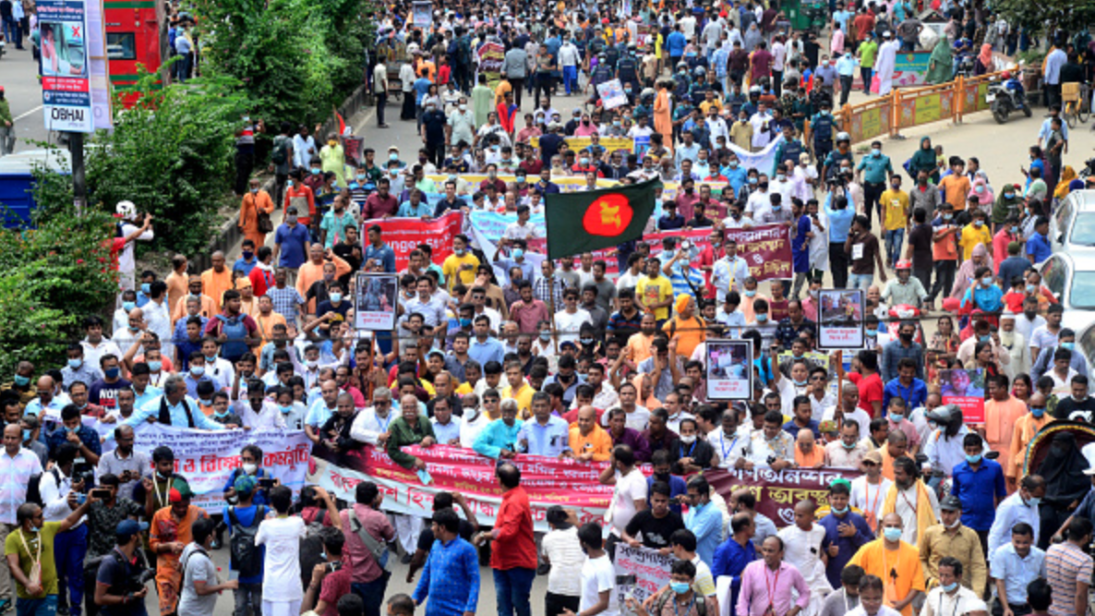
Bangladesh in 2026 presents a complex picture of progress and persistent challenges. The country has achieved notable gains in economic development, education access, and internal security. However, underlying structural issues continue to shape its political stability, governance effectiveness, and security environment.
Extremism and Security Landscape
Religious extremism remains one of the most significant internal security concerns. Although large-scale militant networks have been weakened through counterterrorism operations, the nature of the threat has evolved. Today, extremism is less organized and more dispersed, often influenced by digital platforms and localized socio-economic conditions.
Survey-based findings show that a significant portion of the population still perceives extremism as a direct or indirect threat. Communities report exposure to extremist-related content, and there is cautious public confidence in government countermeasures. Security institutions continue to play a central role, but effectiveness is often viewed as uneven due to institutional and coordination gaps.
Root Causes of Radicalization
The drivers of extremism are multi-layered. The most significant factors include poverty, lack of education, political use of religion, foreign extremist influence, and online radicalization. Socio-economic deprivation remains a key vulnerability, particularly among youth, while political polarization contributes to ideological divisions.
Digital platforms have added a new dimension, enabling rapid dissemination of extremist narratives. Social media and encrypted communication channels are increasingly used for recruitment and propaganda, making online regulation and digital literacy essential components of prevention strategies.
Governance and Institutional Challenges
Bangladesh’s governance system reflects both progress and limitations. While development indicators have improved, institutional weaknesses and policy inconsistencies continue to affect long-term reform. Informal power structures, political competition, and enforcement gaps contribute to challenges in ensuring consistent governance outcomes.
At the same time, the country continues to pursue reforms aimed at strengthening law enforcement capacity, improving coordination among security agencies, and expanding community-based approaches to prevention.
Education and Social Vulnerabilities
Education remains a key structural factor influencing both development and security outcomes. Although primary enrollment is high, secondary completion rates are lower, and early childhood education coverage remains limited. These gaps contribute to skill deficiencies and social vulnerability, particularly among disadvantaged populations.
Climate disruptions further worsen the situation, as millions of children face interruptions in schooling due to floods and environmental risks. In response, Bangladesh is increasingly exploring resilient and blended learning models to maintain continuity in education.
Diplomatic and Global Implications
Extremism also affects Bangladesh’s international image and foreign relations. Security incidents and concerns over radicalization influence how the country is perceived globally. Diplomatic ties, particularly with Western countries and regional partners, are indirectly shaped by internal security conditions.
This has made counter-extremism not only a domestic priority but also a foreign policy concern, requiring stronger international cooperation and strategic communication.
Policy Direction and Future Outlook
Public perception strongly supports a multi-dimensional response to extremism. The most widely endorsed measures include strengthening law enforcement and intelligence, investing in education and poverty reduction, regulating digital platforms, and promoting interfaith dialogue.
The overall direction of policy thinking reflects a shift from purely security-based responses toward integrated approaches that combine enforcement, prevention, and social development.
Conclusion
Bangladesh’s trajectory highlights a nation balancing significant development progress with evolving internal challenges. Extremism, governance constraints, educational gaps, and digital risks form an interconnected set of issues that cannot be addressed in isolation. Long-term stability will depend on coordinated reforms across security, education, governance, and international engagement, ensuring that progress is both sustained and inclusive.