Bangladesh’s development story in recent decades has been closely tied to the political leadership of Sheikh Hasina and the role of the Bangladesh Awami League as a dominant force in shaping national policy. Rooted in the legacy of Sheikh Mujibur Rahman, the party has historically positioned itself as a driving force behind democratic movements, social justice, and economic progress in Bangladesh.
Following years of political struggle and instability after the assassination of Sheikh Mujibur Rahman, Sheikh Hasina emerged as a central figure in restoring party unity and leading it back to power. Since then, her leadership has been associated with efforts to institutionalize democracy, strengthen governance, and pursue long-term development goals. Her tenure has also been marked by attempts to address historical injustices, including the prosecution of those involved in past political violence and war crimes.
Economically, Bangladesh has experienced significant growth, with rising per capita income and ambitions to transition into a middle-income and eventually a developed country. Government-led initiatives have emphasized infrastructure development, industrial expansion, and export growth, particularly in the ready-made garments sector. These efforts have contributed to positioning Bangladesh among rapidly growing economies in the developing world.
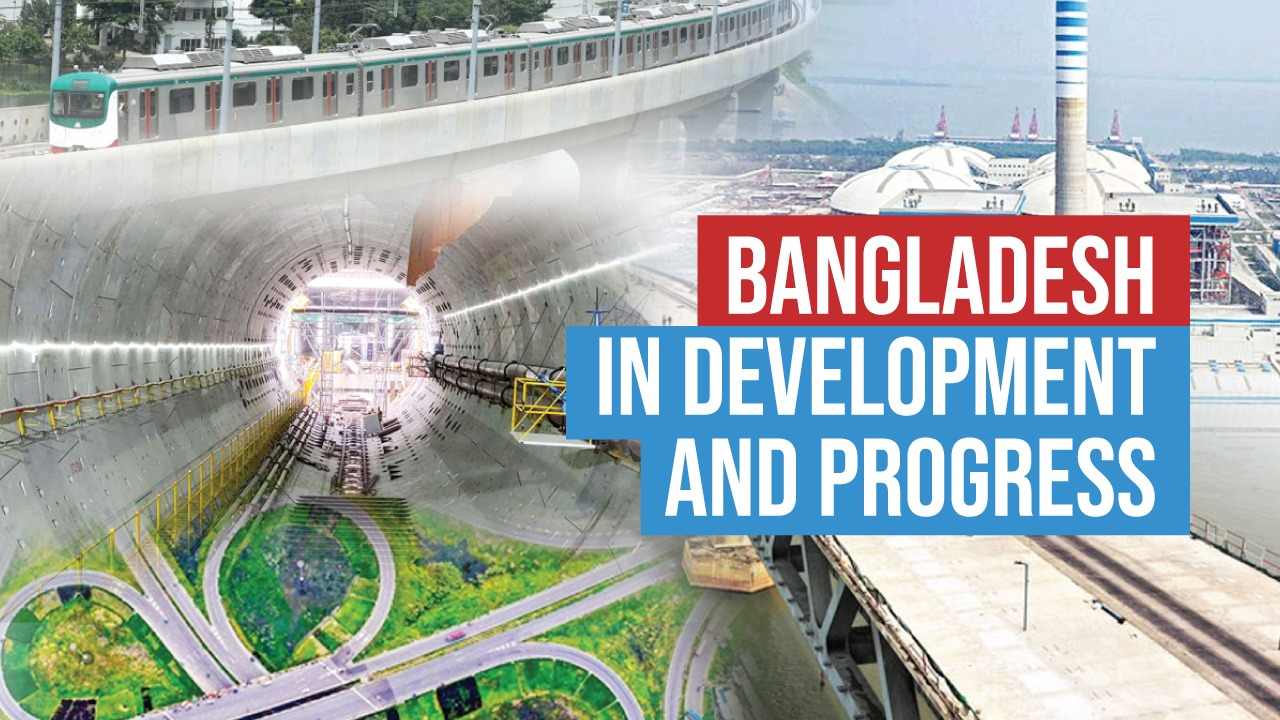
A major highlight of this development agenda is the expansion of large-scale infrastructure projects. The Padma Bridge stands out as a landmark achievement, symbolizing both national ambition and economic connectivity by linking southern regions with the capital. Similarly, the Dhaka Metro Rail represents a significant step toward modernizing urban transportation. Investments in roads, bridges, and energy infrastructure have aimed to accelerate economic activity and improve connectivity across the country.
In the social sector, the government has introduced a wide range of welfare and development programs. These include initiatives in education, healthcare, women’s empowerment, and poverty reduction. The expansion of electricity access, distribution of free textbooks, and targeted support for vulnerable groups such as the elderly, widows, and persons with disabilities have been highlighted as key achievements. Increased agricultural productivity has also contributed to food self-sufficiency, reducing reliance on imports and strengthening rural livelihoods.
Bangladesh’s response to global crises, particularly the COVID-19 pandemic, has been presented as another example of state capacity and policy coordination. Measures included large-scale vaccination campaigns, financial stimulus packages, and emergency support systems for affected populations. These actions were complemented by efforts to sustain economic activity during periods of global disruption, including the economic effects of the Russia-Ukraine War.
At the international level, Bangladesh has received recognition for its development progress and policy initiatives. The government’s achievements have been linked to global development frameworks such as the Sustainable Development Goals (SDGs), reinforcing its image as a rising economy with long-term ambitions. Vision plans, including targets for 2041, outline the goal of transforming Bangladesh into a developed and technologically advanced nation.
Despite these achievements, challenges remain. Economic pressures such as inflation, global market volatility, and dependency on key export sectors continue to pose risks. Governance concerns, including allegations of corruption and institutional weaknesses, are also part of the broader discourse on Bangladesh’s development path. The sustainability of progress will depend on how effectively these structural issues are addressed in the coming years.
In conclusion, Bangladesh’s development narrative reflects a combination of political leadership, economic strategy, and social policy interventions. While significant progress has been made in infrastructure, poverty reduction, and economic growth, the long-term trajectory will depend on strengthening institutions, ensuring inclusive governance, and adapting to an increasingly complex global environment.