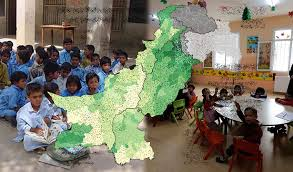
Education in Pakistan: Reform Efforts and Systemic Challenges

Pakistan’s education system operates within a complex environment shaped by economic constraints, governance challenges, and demographic pressures. Despite constitutional guarantees of education as a fundamental right, the sector continues to face persistent gaps in access, learning outcomes, and equity.

A major structural shift occurred following the 18th Constitutional Amendment (2010), which devolved responsibility for education to provincial governments. While this has enabled localized policy approaches, it has also created disparities in implementation and outcomes across provinces.

In recent years, international partnerships have played an increasingly important role in supporting sector-wide reforms. Among these, the Global Partnership for Education has been a key contributor, providing over $370 million in grant support to Pakistan since 2012.

GPE works through a coordinated, multi-stakeholder model involving governments, donors, and development agencies to strengthen education systems, particularly in lower-income and high-need contexts.


Reform Priorities and Interventions

Across provinces, reform efforts focus on improving foundational learning, increasing access, and addressing gender disparities.

  • Punjab has made progress in expanding enrollment and reducing gender gaps, yet learning outcomes remain weak, with a significant proportion of children unable to read at grade level.

  • Khyber Pakhtunkhwa continues to face high dropout rates, with many students leaving school before completing secondary education. Efforts are underway to improve retention and learning quality, particularly for girls.

  • Sindh struggles with low enrollment rates and a high proportion of out-of-school children, especially in marginalized communities.

  • Balochistan faces some of the most severe challenges, including low participation rates and limited early childhood education access, prompting targeted interventions in school readiness and teacher training.

Key reform strategies include:

  • Expanding early childhood education

  • Strengthening teacher training and professional development

  • Improving learning assessments and data systems

  • Promoting gender-inclusive policies

  • Expanding non-formal education for out-of-school children


Impact and Ongoing Challenges

These interventions have produced measurable but uneven progress.

On the positive side:

  • Enrollment has increased in several provinces

  • Gender gaps in access have narrowed in some regions

  • New learning programs and non-formal schools are reaching marginalized children

However, significant challenges remain:

  • Millions of children are still out of school

  • Learning poverty persists, with many students lacking basic literacy and numeracy skills

  • Regional and socio-economic inequalities continue to shape educational outcomes


Why It Matters

Education is central to Pakistan’s long-term development trajectory. While initiatives supported by organizations such as the Global Partnership for Education are contributing to systemic improvements, the scale of the challenge requires sustained political commitment, increased investment, and stronger institutional coordination.

The current trajectory suggests that Pakistan is making incremental progress, but achieving transformative change will depend on addressing both access and quality simultaneously, particularly for the most marginalized populations.