The human rights situation in the Democratic People’s Republic of Korea remains one of the most persistent and complex challenges in global governance. For decades, the international community has grappled with how to address systemic abuses in a highly isolated state while maintaining stability in a region marked by nuclear tensions and fragile diplomacy. Recent developments in 2026 have brought renewed attention to this issue, particularly through a notable policy shift by South Korea.
A Shift in South Korea’s Policy Approach
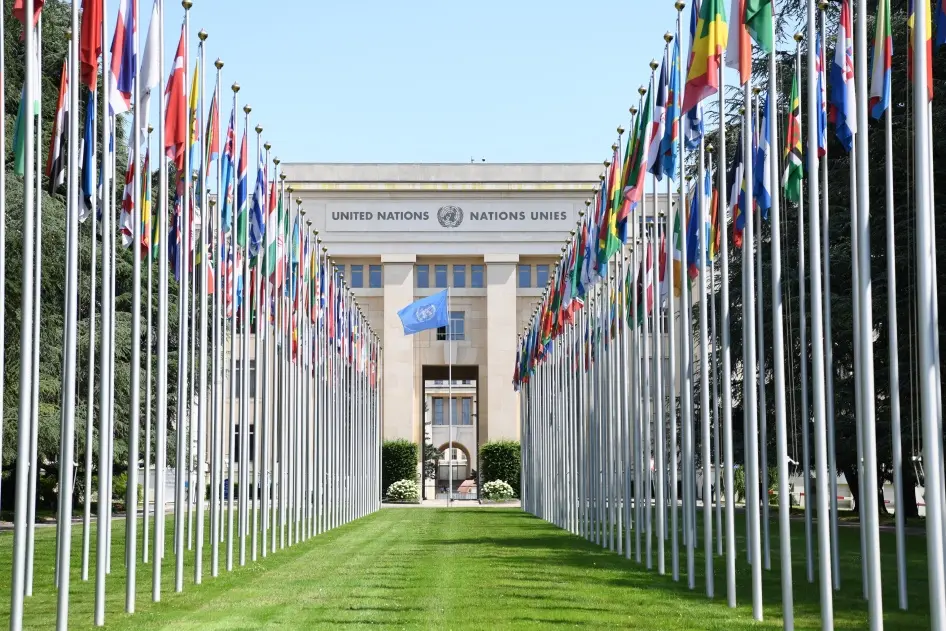
On March 30, 2026, during the 61st session of the UN Human Rights Council, South Korea co-sponsored the annual resolution on human rights in North Korea. This move, led by President Lee Jae-myung, marks a departure from previous administrations that prioritized diplomatic engagement over public human rights advocacy.
The resolution, adopted by consensus, reinforces international concern over widespread violations, including political repression, forced labor, and restrictions on fundamental freedoms. It also reaffirms findings from the 2014 UN Commission of Inquiry, which documented crimes that may amount to crimes against humanity.
The Tension Between Rights and Security
South Korea’s decision has reignited a longstanding debate: should human rights be pursued independently of security considerations, or should they be balanced within broader diplomatic strategies?
Supporters of the new approach argue that a firm stance on human rights strengthens international norms and signals moral clarity. They believe that avoiding these issues for the sake of dialogue has historically produced limited results.
On the other hand, critics warn that such moves may provoke North Korea, potentially escalating tensions on the Korean Peninsula. Given the region’s nuclear dynamics, even small diplomatic shifts can carry significant consequences.
Lessons from Past Engagement Strategies
Between 2019 and 2022, efforts to engage North Korea focused largely on dialogue and de-escalation, often sidelining human rights concerns. However, organizations like Human Rights Watch and NKNet argue that this approach failed to achieve lasting peace or meaningful reform.
These groups emphasize that compromising on accountability undermines international legal principles. In their view, sustainable peace cannot be built without addressing systemic abuses. They argue that allowing a state to dictate the terms under which its human rights record is scrutinized weakens the entire global human rights framework.
The Plight of Defectors and Transnational Concerns
Beyond its borders, North Korea’s human rights issues extend into neighboring countries. One of the most pressing concerns involves defectors who flee the country, many of whom seek refuge in China.
International law, particularly the principle of non-refoulment, prohibits returning individuals to a country where they face serious threats to their safety. However, advocacy groups continue to report cases where defectors are forcibly repatriated, exposing them to severe punishment, including imprisonment, torture, and forced labor.
This transnational dimension highlights the broader regional implications of North Korea’s human rights crisis and the need for coordinated international responses.
Conclusion
The evolving situation in North Korea underscores a fundamental dilemma in international relations: how to uphold universal human rights while navigating complex security realities. South Korea’s renewed commitment to accountability signals a shift toward a more principled approach, but it also raises important questions about the risks and trade-offs involved.
As global attention returns to North Korea’s human rights record, the challenge for policymakers will be to ensure that efforts toward peace and stability do not come at the cost of justice and accountability. The path forward will require careful balancing, sustained international cooperation, and a clear commitment to the principles that underpin human dignity.