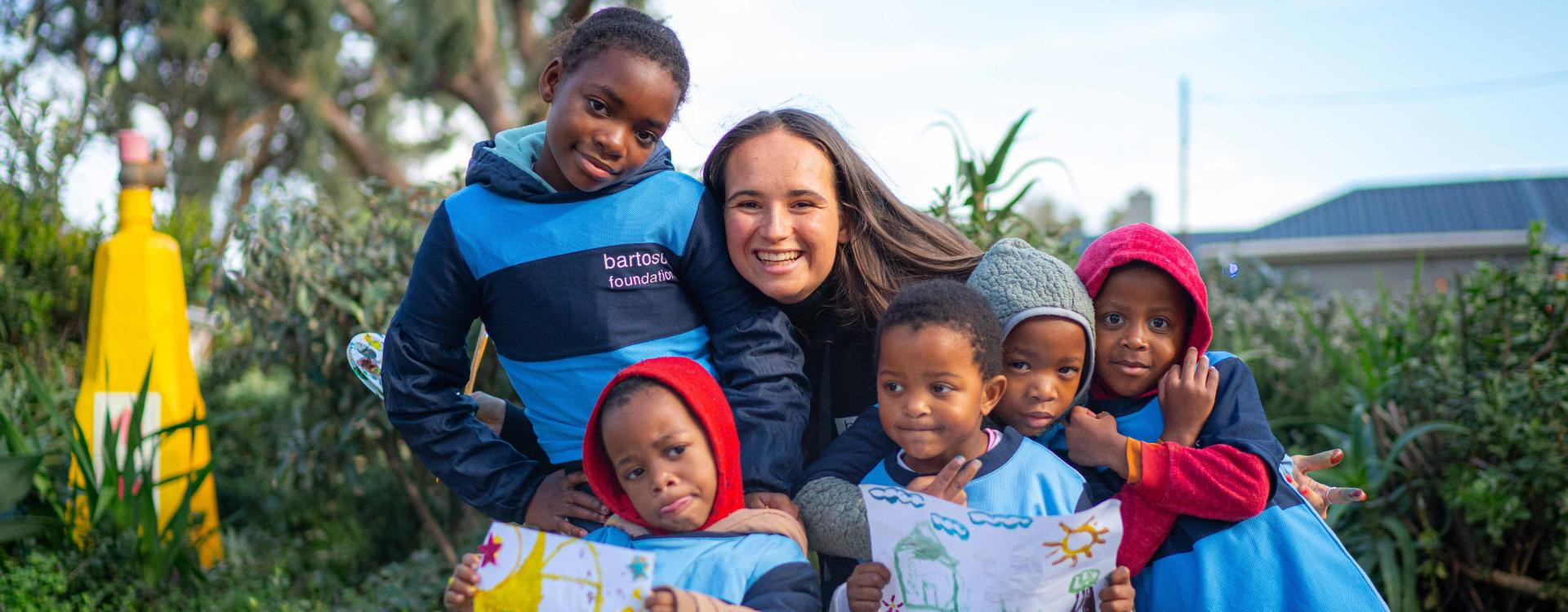
The Power of Soccer, Education, and an Unlikely Connection in Masiphumelele

Human Rights: Equality & Protection

Bridging the Divide: The Bartosch Foundation’s Integrated Model for Social Upliftment

The Bartosch Foundation stands as a compelling case study at the intersection of grassroots social action and systematic community development. By synthesizing a journalistic narrative of human connection with an academic analysis of social capital, this article examines how targeted interventions can mitigate systemic inequality.

The Catalyst: A Serendipitous Intersection

The foundation’s origins are rooted in a chance encounter in 2020. Petya Bartosch, a graduate of the Stellenbosch Academy of Design and Photography, was delivering food parcels in the township of Masiphumelele. Simultaneously, Xolani Mahlulo, a local resident who grew up without his father and faced the premature loss of his mother, was coaching children in football.

Their collaboration emerged from a shared commitment to unconditional giving, effectively bridging two disparate socioeconomic worlds that rarely collide. This narrative underscores the "ripple effect" of individual agency, as described by Bartosch, where personal connections serve as the foundation for broader community transformation.

Operational Framework: An Integrated Approach

The Bartosch Foundation’s methodology shifts away from singular-focus charity toward a multi-dimensional support system designed to foster academic, physical, and psychological growth. The program operates on a structured Sunday schedule, emphasizing the following pillars:

  • Academic Reinforcement: Children participate in lessons covering mathematics, science, and Afrikaans to bolster their standard school curriculum.

  • Physical and Holistic Wellbeing: The curriculum extends beyond traditional academics to include yoga and agricultural training (farming), which are intended to broaden the children's life skills and emotional regulation.

  • Sport as a Socio-Educational Tool: Soccer serves as the primary hook for engagement, leveraging the community’s high regard for sports heroes to unite the youth and teach values of discipline and teamwork.

  • Experiential Learning: The foundation organizes monthly excursions to regional landmarks—including Table Mountain, the Two Oceans Aquarium, museums, and science centers—to broaden the children’s horizons and instill a sense of belonging in the wider national landscape.

Academic Perspective: Social and Cultural Capital

From a developmental standpoint, the foundation operates through the strategic deployment of social and cultural capital. By leveraging Xolani’s existing community trust and Petya’s access to external resources, the partnership effectively circumvents traditional barriers to entry that often hinder NGO work in marginalized areas.

The program’s emphasis on "broadening horizons" functions as a mechanism for building social mobility. By providing exposure to environments previously inaccessible to these children, the foundation facilitates a shift in self-perception and confidence. This model suggests that the most sustainable interventions are those that address the "divided childhoods" of the participants—counteracting limited resources with a combination of academic support, physical wellness, and geographic exposure to the world beyond their immediate township borders.

Ultimately, the Bartosch Foundation demonstrates that when individual altruism is formalized through an integrated development model, it can foster a sustainable framework for community upliftment and individual agency.