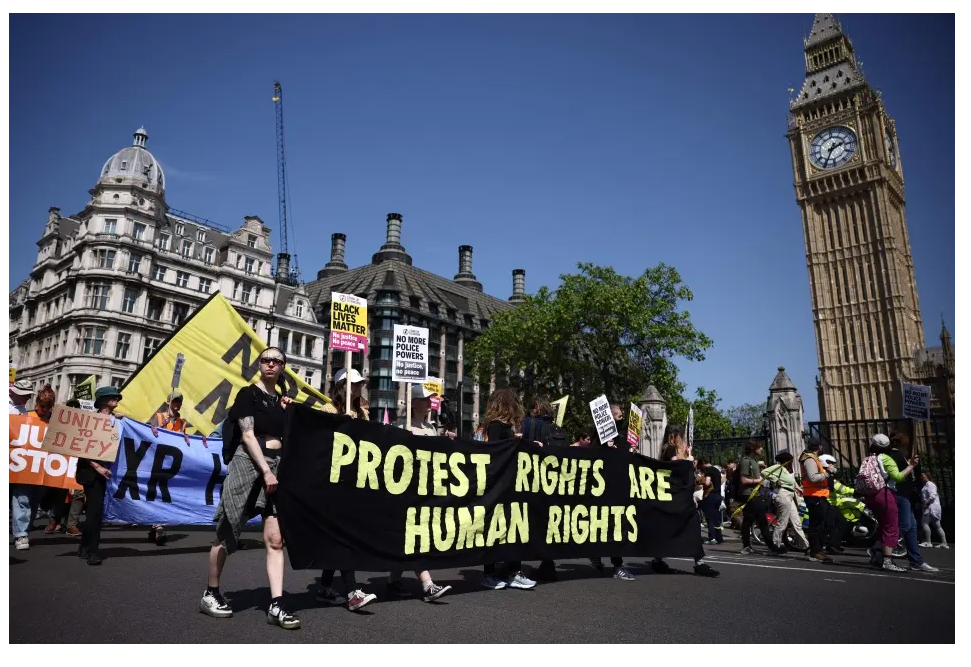
The Fragile Foundation Global Challenges to Peaceful Assembly in 2026


In an era of increasing campus polarization and legislative scrutiny, the definition of academic freedom is being tested in the courts. This report, based on the latest 2026 research, explores the critical distinctions between First Amendment rights and professional tenure, the role of institutional neutrality, and the shifting legal landscape for scholars and students.While the right to assemble is enshrined in nearly every national constitution, the gap between legal promise and daily reality is widening. This report examines the "positive obligations" of states to facilitate protest, the rise of "invisible" digital barriers, and the international legal benchmarks that define when a restriction crosses the line into a human rights violation.

The Legal Ideal vs. The Reality of Restrain

International law, specifically Article 21 of the International Covenant on Civil and Political Rights (ICCPR), dictates that the right to peaceful assembly is the rule, and restrictions must be the exception. For a government to legally restrict a gathering, it must prove that the limitation is provided by law, serves a legitimate aim (such as public health or national security), and is proportionate to that aim.

However, in 2026, many states are using "administrative maneuvering" to bypass these protections:

Mandatory Permitting: While international standards suggest that only notification should be required, many jurisdictions have shifted to strict authorization models, effectively giving the state a veto over dissent.

Restrictive Zoning: The trend of "Protest Zones" or "Free Speech Alleys" often moves demonstrators far from their intended audience, violating the "sight and sound" principle essential for effective protest.

Digital Assembly and the Surveillance Chill

In the current landscape, the right to assemble is no longer strictly physical. The UN Human Rights Council has recognized that digital spaces are vital for organizing and expressing collective grievances.

A significant threat in 2026 is the use of AI-driven surveillance at protest sites. The deployment of facial recognition technology and "stingray" devices (IMSI-catchers) creates a "chilling effect," where individuals stay home not out of a lack of conviction, but out of fear of future state retaliation or inclusion in biometric databases.

State Obligations: Facilitation, Not Just Tolerance

A common misconception is that the state only needs to "allow" a protest. In reality, international standards require states to:

Facilitate: Actively manage traffic and provide security to ensure protesters are safe from counter-protesters or external threats.

Protect: Ensure that "less-lethal" policing equipment (tear gas, rubber bullets) is used only in situations of imminent threat, as mandated by the 2026 UN Guidance on the Management of Assemblies.

Account: Provide transparent investigations into any use of force by law enforcement during public demonstrations.

Conclusion

The right to assemble peacefully is the "ultimate safety valve" for society. When citizens are denied the ability to gather and voice their concerns collectively, the path to social progress and peaceful reform is blocked. For GPN International, monitoring these "Civic Space" violations remains a top priority, as the health of a nation's assembly rights is often the most accurate predictor of its overall democratic stability.