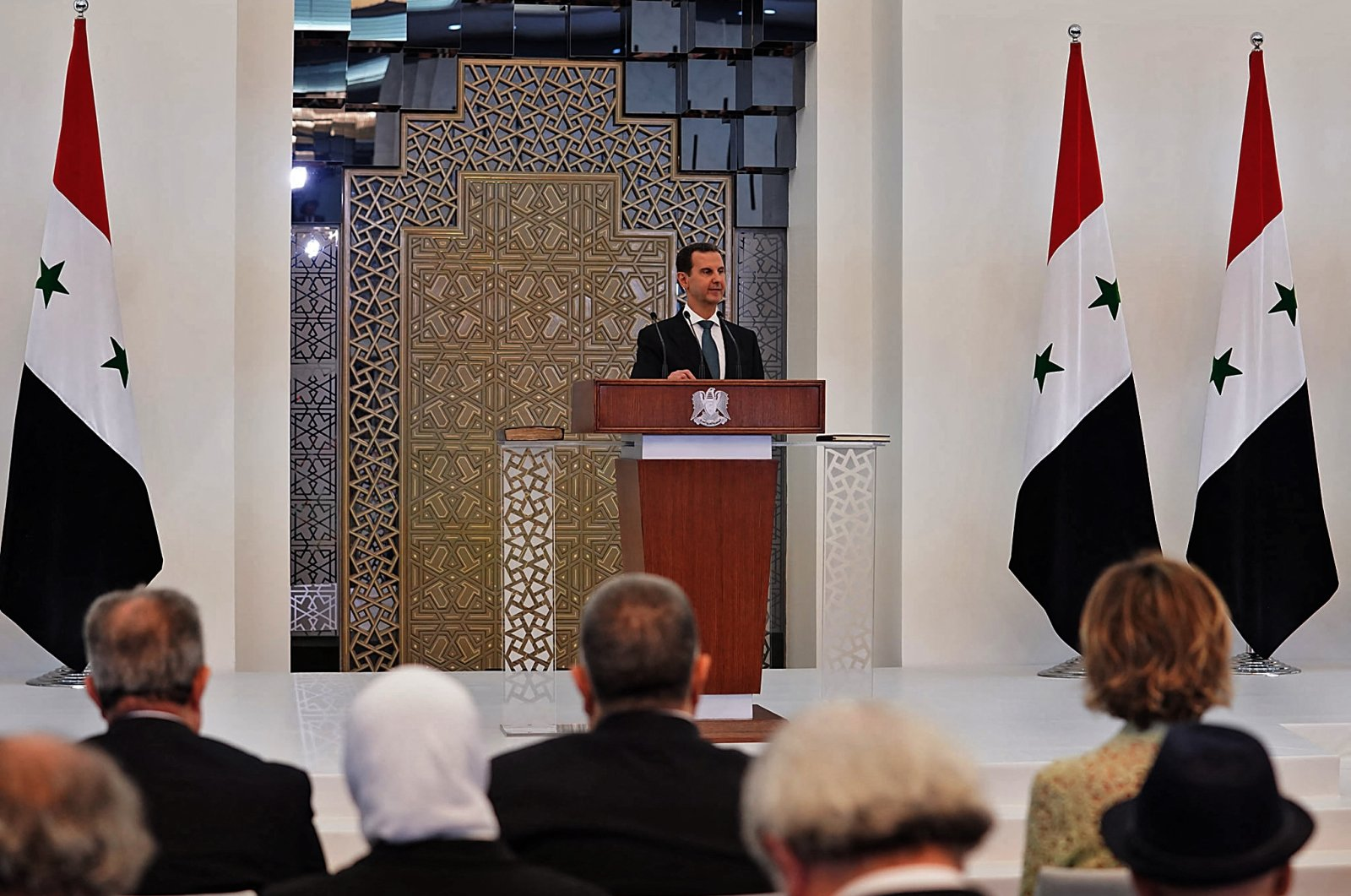
A Security-Centric System Centered on Family and Elite Networks
Syria was long governed by one of the most enduring examples of a personalist authoritarian regime in the modern Middle East. For over five decades, power was concentrated in the hands of the Assad family, first under Hafez al-Assad (1971–2000) and then under his son Bashar al-Assad (2000–2024). The regime relied on a tight network of loyal security forces, intelligence agencies, military units, and crony business elites to maintain absolute control. Formal institutions such as the Ba'ath Party and the government existed primarily to legitimize and implement the leader’s decisions rather than to check or distribute power.
Although the Assad regime collapsed rapidly in December 2024 following a lightning rebel offensive led by Hay'at Tahrir al-Sham (HTS), its structure remains a textbook case study of how personalist systems operate. These regimes concentrate authority in one leader and a small inner circle, using coercion, sectarian loyalty, economic patronage, and family-based networks as the main tools of survival.
Overview of the Assad-Era Political Landscape
The Assad regime blended elements of one-party rule, military dictatorship, and family dominance. Hafez al-Assad seized power in 1970 through an internal Ba'ath Party coup and built a highly centralized system that fused the state, the ruling party, and the security apparatus. When Bashar al-Assad inherited power in 2000 after his father’s death, he initially experimented with limited reforms (the so-called “Damascus Spring”), but these were quickly reversed. The 2011 Arab Spring uprising triggered a brutal civil war that further hardened the regime’s repressive character.
By the 2020s, decision-making had narrowed to a very small circle centered on Bashar, his brother Maher al-Assad (commander of the elite 4th Armoured Division), and a handful of trusted security chiefs and business cronies. The regime survived years of civil war, international sanctions, and territorial losses largely through external support from Iran, Hezbollah, and Russia, combined with ruthless internal control.
The Core Power Structure
The Assad regime’s governance model rested on three interlocking pillars:
Family and Inner Circle
Power was deeply personalized and family-based. Bashar al-Assad sat at the apex, but key repressive and military roles were often held by close relatives, especially his brother Maher. Loyal Alawite officers and longtime associates formed a protective inner circle. This family-centric approach ensured high levels of personal loyalty but also created fragility, as the system depended heavily on the leader’s survival and the cohesion of this small network.
Security Apparatus (Mukhabarat)
The intelligence services (mukhabarat) were the backbone of regime control. Multiple overlapping security agencies spied on citizens, monitored dissent, and engaged in widespread torture and arbitrary arrests. The regime deliberately pitted different branches against one another to prevent any single agency from becoming too powerful. This pervasive surveillance state created an atmosphere of fear and mutual distrust, even within families.
Military and Ba'ath Party
The Syrian Arab Army and elite units (such as the Republican Guard and 4th Division) provided the coercive muscle. The Ba'ath Party, while formally the ruling party since 1963, functioned more as a patronage and mobilization tool than an independent political force. Party membership offered access to jobs and privileges, reinforcing loyalty among state employees and elites.
Mechanisms of Power Control
The regime employed a sophisticated mix of tools to maintain dominance:
Brutal Repression and Coercion — Widespread use of arrests, torture, chemical weapons, and barrel bombs against opposition areas. Political prisoners numbered in the tens of thousands, and the regime was accused of systematic crimes against humanity.
Sectarian Alliances — The Assad family belongs to the Alawite minority. The regime cultivated Alawite dominance in the security forces while presenting itself as the protector of religious minorities against Sunni majoritarianism. This sectarian strategy helped secure core loyalty but deepened societal divisions.
Economic Patronage and Crony Networks — A small group of regime-connected businessmen controlled key sectors of the economy. Sanctions and war created opportunities for smuggling and corruption, which the regime used to reward loyalists and maintain elite buy-in.
Ideological and Propaganda Control — The regime promoted a cult of personality around the Assad family, blending Arab nationalism, Ba'athist ideology, and claims of resistance against Israel and Western imperialism. State media tightly controlled the narrative.
The Fall of the Regime in 2024
Despite decades of apparent resilience, the Assad regime collapsed with surprising speed in December 2024. A rapid rebel offensive, combined with the weakening of external backers (Russia distracted by its war in Ukraine, Iran and Hezbollah depleted by conflicts with Israel), exposed the regime’s internal hollowness. Large parts of the military and security forces melted away or refused to fight, revealing how personalist systems can appear strong until the leader’s authority suddenly evaporates.
The fall highlighted both the strengths and fatal weaknesses of personalist rule: extreme centralization can deliver short-term stability, but over-reliance on one leader and a narrow elite network often leads to brittleness when external support wanes or internal loyalty fractures.
Legacy and Lessons
The Assad-era regime serves as a powerful illustration of personalist authoritarianism. It concentrated power in one family, subordinated state institutions to the leader’s will, and relied heavily on coercion and patronage rather than broad legitimacy or strong formal rules. While such systems can endure for decades, they often prove fragile when faced with simultaneous internal decay and external shocks.
The post-Assad transition in Syria continues to grapple with the difficult legacy of this highly centralized and repressive model.
Visual Representation: Symbols of the Assad-Era Power Structure
Bashar al-Assad — The central figure of the personalist regime, representing absolute leadership and family-based rule.

cnn.com
Who is Bashar al-Assad, the Syrian leader whose family ruled with an iron fist for more than 50 years? | CNN
Damaged Assad Portrait — A powerful symbol of the regime’s eventual fragility despite years of iron-fisted control and security apparatus dominance.

foreignpolicy.com
Syria: Assad Collapse Shows How the World Misjudged Regime's Strength
Syrian Military and Security Forces — Illustrates the central role of the army and intelligence services in sustaining the personalist authoritarian system.

france24.com
Syria marks one year since Assad's toppling with festivities and military parades - France 24
These images capture the essence of the Assad regime: the cult of personality around the leader, the visible symbols of control, and the military-security backbone that ultimately proved insufficient to prevent collapse.