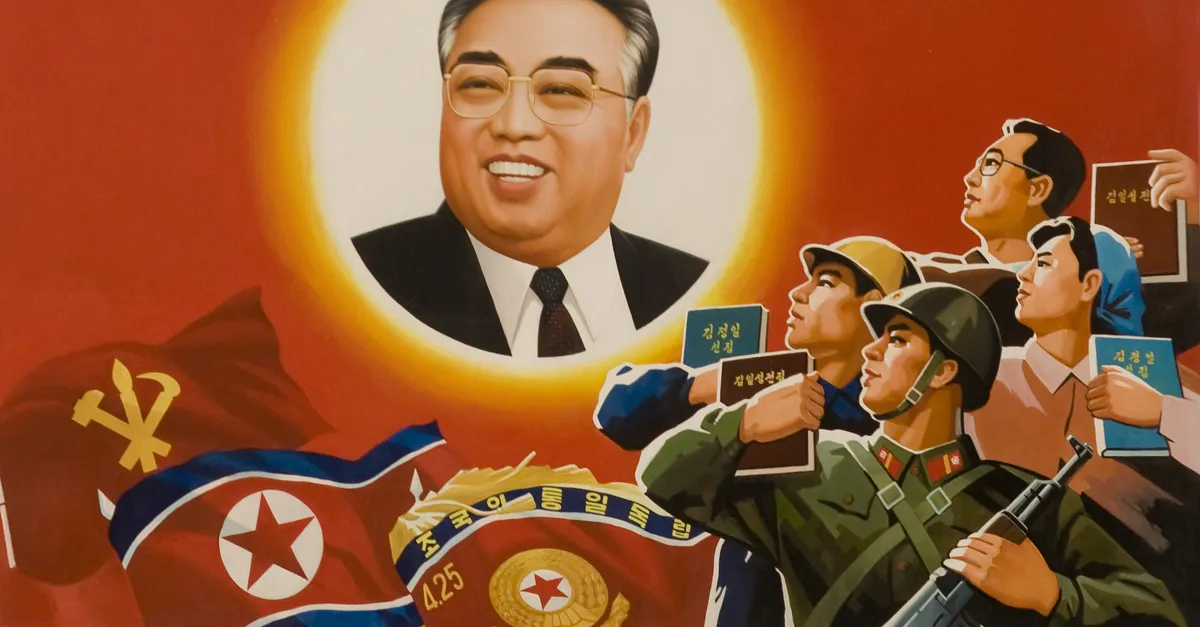
North Korea represents one of the most extreme examples of a personalist totalitarian regime in the modern world. Power is concentrated almost entirely in the hands of the Kim family through hereditary succession, with the current leader, Kim Jong Un, holding absolute authority as the supreme ruler. The system blends intense cult of personality around the leaders with the official state ideology of Juche (self-reliance) and Songun (military-first policy). These elements are reinforced by pervasive surveillance, a powerful secret police apparatus, strict control over information and movement, and frequent elite turnover to prevent any potential challenges from within the ruling circle.
The regime maintains its grip through a combination of ideological indoctrination, social engineering, and ruthless coercion. Citizens are organized into tightly monitored groups where loyalty to the Kim family is constantly reinforced through propaganda, mandatory study sessions, and public displays of devotion. The songbun system classifies people according to their perceived political reliability, determining access to food, education, jobs, and even residence. Any sign of dissent can lead to severe punishment, including imprisonment in brutal labor camps, torture, or execution, often extending to entire families under the principle of collective responsibility.
Key Analyses of Regime Survival and Control Mechanisms
Keeping Kim: How North Korea's Regime Stays in Power
This policy brief, drawing from detailed research, explains how the Kim regime has defied repeated predictions of collapse. It highlights the use of social engineering to eliminate the very foundations of potential opposition, combined with strategic coercion, elite buy-offs through controlled resource distribution, and manipulation of external relations to secure hard currency and military support. The analysis underscores why the regime appears more resilient than many outsiders assume, focusing on its sophisticated tools for preventing both popular revolts and internal coups.
Pyongyang's Survival Strategy: Tools of Authoritarian Control in North Korea
A foundational scholarly work that dissects the regime’s multifaceted strategies for survival. It explores repression through the security services, widespread indoctrination via state media and education, isolation of the population from outside information, and the deliberate creation of dependency on the regime for basic needs. The study shows how these tools work together to neutralize threats from below (the masses) and from within (ruling elites), making North Korea a textbook case of totalitarian control.
Strategies of Political Control under Kim Jong Un
This more recent examination looks at the evolving mix of governance tactics under the current leader. It details how Kim Jong Un balances harsh repression with selective co-optation of loyal elites, alongside coercive distribution of resources (especially evident during periods of crisis like the COVID-19 lockdowns). The analysis also covers containment strategies that limit potential opposition networks while maintaining tight centralized command over the military and party structures.
North Korea: Systematic Repression
Human rights-focused reporting that documents the regime’s total domination over citizens’ lives. It covers the extensive network of political prison camps, widespread use of torture and forced labor, the rigid songbun loyalty classification system, and complete state monopoly on information and communication. These mechanisms ensure that individual rights are subordinated entirely to the needs of regime stability and leader worship.
Understanding the North Korean Regime
This comprehensive overview delves into the formal and informal power structures, including the role of the suryong (supreme leader) system, the nominal constitution that in practice grants unlimited authority to the Kim family, and the interlocking institutions of the Workers’ Party, the military, and the security services. It provides valuable insight into how ideology, institutions, and personal rule reinforce one another to sustain this highly centralized totalitarian system.
Together, these works illustrate why North Korea’s regime has endured for decades despite extreme isolation, economic hardship, and international pressure. The combination of ideological totalism, personalist leadership, and multilayered control mechanisms creates a system that is exceptionally difficult to challenge from within or without. The hereditary nature of power further entrenches the Kim family’s dominance, turning the state into what many analysts describe as a de facto dynasty wrapped in totalitarian structures.