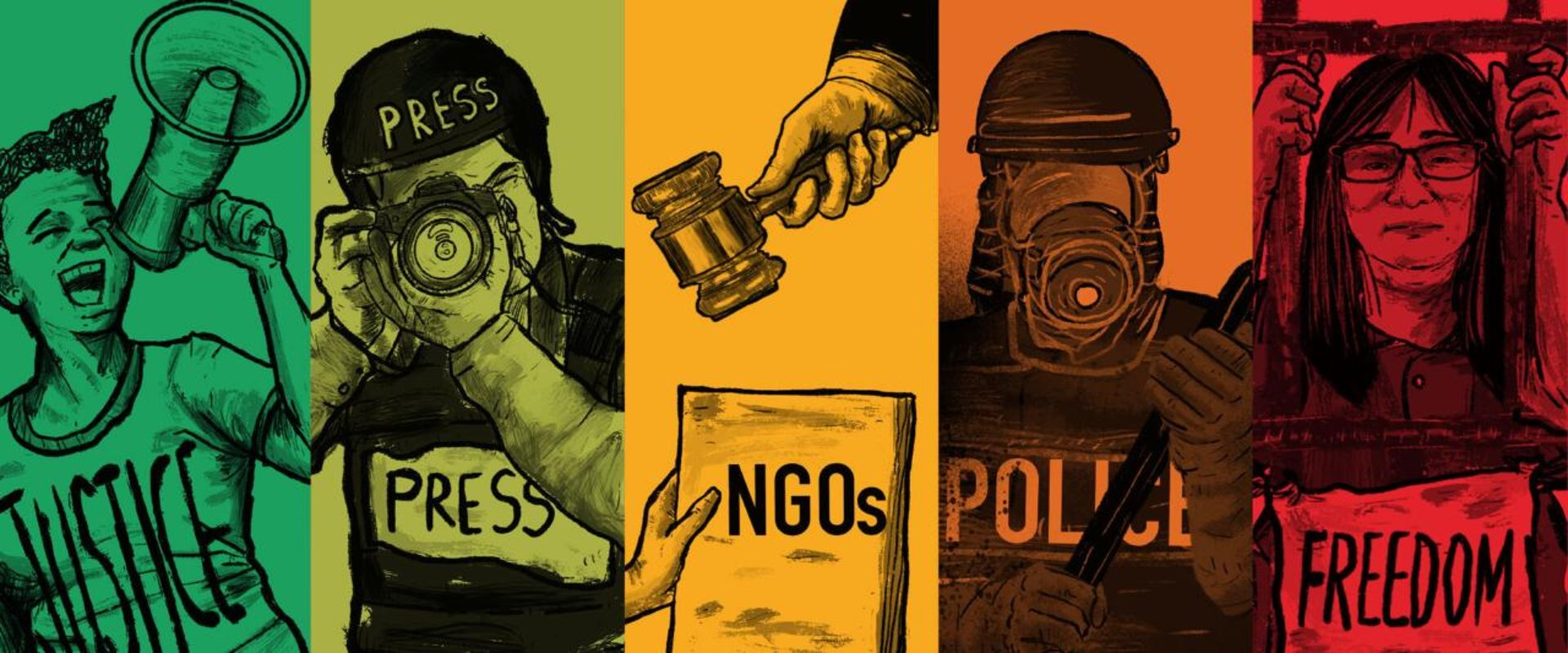
Voices in the Shadow: The Human Rights Cost of Suppressing Opposition

The Right to Dissent: Understanding the Suppression of Opposition under Human Rights Law

In the framework of international human rights, the existence of an opposition is not merely a political preference; it is a legal necessity. The ability to criticize, organize, and offer alternative visions for a country is protected by a constellation of rights that ensure a "free and fair" society. When these rights are systematically dismantled, it is known as the suppression of opposition.


1. The Legal Pillars: International Standards

The suppression of opposition is primarily a violation of the International Covenant on Civil and Political Rights (ICCPR). Several key articles form a protective shield around dissenting voices:

  • Article 19 (Freedom of Expression): This is the bedrock of opposition. It protects the right to hold opinions without interference and to seek, receive, and impart information through any media.

  • Article 21 (Right of Peaceful Assembly): This ensures that opposition groups can gather in public spaces to demonstrate, protest, or hold rallies without fear of arbitrary dispersal or arrest.

  • Article 22 (Freedom of Association): This specifically protects the right to form political parties, NGOs, and trade unions—the organizational vehicles of any opposition.

  • Article 25 (Right to Participate in Public Affairs): This guarantees the right to vote and to be elected in genuine periodic elections, ensuring that the opposition has a path to power through the will of the people.


2. Common Methods of Suppression

When states move to suppress opposition, they rarely do so by declaring human rights "void." Instead, they often use the law to undermine the law.

Digital and Informational Warfare

In the modern era, suppression has moved online. Governments may use internet shutdowns during periods of political unrest to prevent the opposition from organizing. Furthermore, the use of state-sponsored "troll farms" to harass activists or spread disinformation creates a "chilling effect," where individuals become too afraid to speak out.

The "Lawfare" Strategy

"Lawfare" is the use of legal systems and institutions to damage or delegitimize an opponent. This includes:

  • Selective Prosecution: Charging opposition leaders with non-political crimes (such as tax evasion or corruption) to disqualify them from running for office.

  • Restrictive NGO Laws: Passing "foreign agent" laws that cut off funding for human rights groups and opposition-aligned civil society.

Physical Coercion

In more extreme cases, suppression takes the form of arbitrary detention, enforced disappearances, or the use of excessive force against peaceful protesters. These actions violate the fundamental right to liberty and security of person.


3. The Impact on Society

The suppression of opposition is often a precursor to broader human rights crises. When dissent is silenced, the following consequences usually occur:

  • Erosion of Accountability: Without an opposition to check the government's power, corruption and administrative failures go unnoticed.

  • Institutional Decay: Independent institutions, such as the judiciary and the media, are often captured by the state to facilitate suppression.

  • Increased Radicalization: When peaceful channels for change are closed, individuals may feel that non-peaceful means are the only remaining option.


4. The Role of the International Community

International human rights bodies, such as the UN Human Rights Council, play a vital role in monitoring these violations. Through the Universal Periodic Review (UPR), countries are held accountable by their peers for how they treat political dissidents. Additionally, international awareness and diplomatic pressure remain key tools in protecting those who risk their lives to provide a dissenting voice.