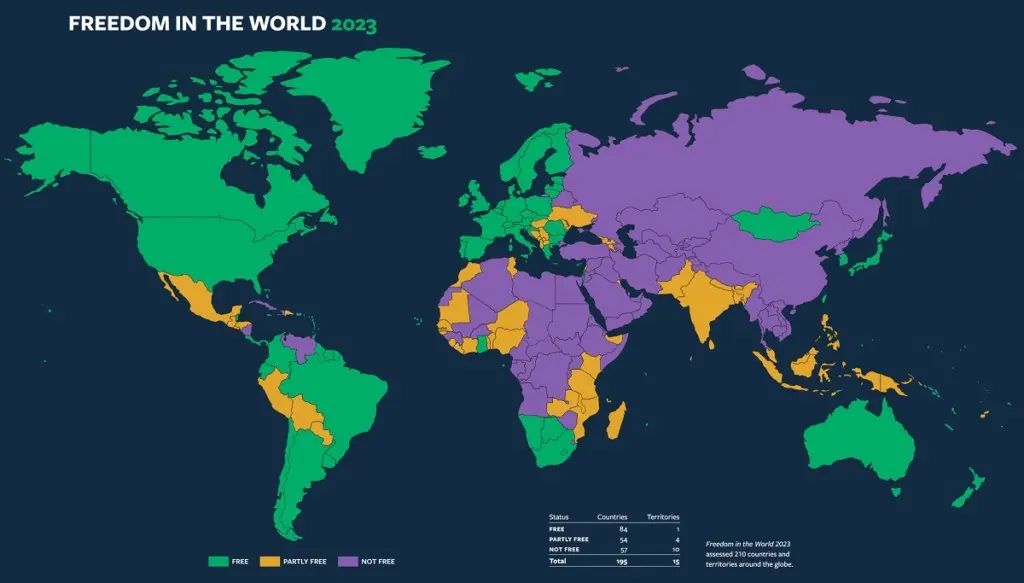
Beyond the Dictator: Mapping the Structures of Absolute Power in 2026

Global Case Studies: Power in Practice

1. Totalitarian Systems: The Pursuit of Absolute Control

Totalitarian regimes represent the extreme end of the power spectrum, where the state seeks to eliminate the boundary between public and private life.

  • North Korea (The Classic Totalitarian Model):
    As of 2026, North Korea remains the world’s most prominent example of a "closed" totalitarian system.

    • Mechanism: The regime maintains control through the Songbun social credit system and extreme information isolation.

    • Fact: In 2025, the state intensified crackdowns on Chinese mobile phones and foreign media, with the Ministry of State Security increasing surveillance inspections to prevent any "ideological pollution" from the outside world.

  • Eritrea (The Surveillance State):
    Often called the "North Korea of Africa," Eritrea uses indefinite military conscription to control its population.

    • Mechanism: The National Service system acts as a tool for forced labor and social mobilization, effectively keeping the productive-age population under direct military command for decades.

    • Fact: By March 2026, reports indicate that the ruling PFDJ party maintains a complete monopoly on the economy, with no implemented constitution and zero independent press.

2. Authoritarian Systems: Managing the Status Quo

Authoritarian regimes focus on maintaining the elite's grip on power, often allowing limited social freedoms as long as the political leadership is not challenged.

  • Hungary (The Illiberal Democracy):
    Hungary serves as a modern case study in "Competitive Authoritarianism" or a "Defective Democracy."

    • Mechanism: Instead of mass terror, the regime uses Crony Capitalism and legal maneuvers to undermine the rule of law.

    • Fact: By early 2026, analysis shows that while elections still occur, the media landscape has been funneled to loyal oligarchs, with Hungary’s freedom scores dropping significantly since 2010.

  • Venezuela (The Authoritarian Adaptation):
    Following major political shifts in early 2026, Venezuela illustrates how authoritarian structures can persist even during leadership transitions.

    • Mechanism: The regime utilizes selective repression and the co-optation of the military to maintain stability.

    • Fact: Even with changes in the executive office, the underlying structures of the state security apparatus remain intact, focusing on neutralizing political rivals rather than total social mobilization.


3. The Hybrid Frontier: Digital Totalitarianism in China

China represents a unique evolution, using high-tech tools to achieve totalitarian outcomes within a globally integrated economy.

  • Smart Authoritarianism: China has pioneered a strategy that preserves political dominance through technology rather than just blunt force.

  • The Digital Panopticon: The use of AI-driven facial recognition, DNA databases, and the Great Firewall allows the state to monitor dissent in real-time.

  • GPN Insight: This "Smart" approach allows the regime to remain economically innovative while strictly enforcing ideological conformity, representing a 21st-century evolution of power control.


Comparative Summary for GPN Reporting

Country

Regime Type

Primary Control Tool

2026 Status

North Korea

Totalitarian

Ideological Purity / Terror

Increased isolation; death penalty for foreign media.

China

Digital Totalitarian

AI Surveillance / Social Credit

Integration of technology with political policing.

Hungary

Authoritarian

Media Capture / Oligarchy

Erosion of judicial independence and press freedom.

Eritrea

Totalitarian

Forced Labor / Conscription

No implemented constitution; military-run economy.