Terms of use dolor sit amet consectetur, adipisicing elit. Recusandae provident ullam aperiam quo ad non corrupti sit vel quam repellat ipsa quod sed, repellendus adipisci, ducimus ea modi odio assumenda.
Disclaimers
Lorem ipsum dolor sit amet consectetur adipisicing elit. Sequi, cum esse possimus officiis amet ea voluptatibus libero! Dolorum assumenda esse, deserunt ipsum ad iusto! Praesentium error nobis tenetur at, quis nostrum facere excepturi architecto totam.
Lorem ipsum dolor sit amet consectetur adipisicing elit. Inventore, soluta alias eaque modi ipsum sint iusto fugiat vero velit rerum.
Limitation on Liability
Sequi, cum esse possimus officiis amet ea voluptatibus libero! Dolorum assumenda esse, deserunt ipsum ad iusto! Praesentium error nobis tenetur at, quis nostrum facere excepturi architecto totam.
Lorem ipsum dolor sit amet consectetur adipisicing elit. Inventore, soluta alias eaque modi ipsum sint iusto fugiat vero velit rerum.
Copyright Policy
Dolor sit amet consectetur adipisicing elit. Sequi, cum esse possimus officiis amet ea voluptatibus libero! Dolorum assumenda esse, deserunt ipsum ad iusto! Praesentium error nobis tenetur at, quis nostrum facere excepturi architecto totam.
Lorem ipsum dolor sit amet consectetur adipisicing elit. Inventore, soluta alias eaque modi ipsum sint iusto fugiat vero velit rerum.
General
Sit amet consectetur adipisicing elit. Sequi, cum esse possimus officiis amet ea voluptatibus libero! Dolorum assumenda esse, deserunt ipsum ad iusto! Praesentium error nobis tenetur at, quis nostrum facere excepturi architecto totam.
Lorem ipsum dolor sit amet consectetur adipisicing elit. Inventore, soluta alias eaque modi ipsum sint iusto fugiat vero velit rerum.
We use cookies to ensure you get the best experience on our website. By continuing to use our site, you accept our use of cookies, Privacy Policy, and Terms of Service.
●
Xi says that China’s and the US’s common interests “outweigh” their differences as Trump hails the Chinese president’s “great” leadership.
●
Trump-Xi summit live: US, China leaders holding talks on trade, tech, Iran
●
Study says heatwaves in India and Pakistan should be ‘extraordinarily rare’ but current level of global warming made them 30 times more likely.
●
Governor of Mexico’s Sinaloa state steps down after US drug indictment
●
Israeli settlers target Palestinian water sources
●
Rescue and support operation initiated after Maritime Rescue and Coordination Centre in Mumbai contacted Pakistani authorities and requested assistance.
●
Iran says 'no military solution' to political crisis as it warns US, UAE over Hormuz tensions
●
Oil prices surge as violence flares in Strait of Hormuz
●
US, Iran trade threats over Strait of Hormuz as attack on UAE condemned
●
North Korea strengthens nuclear push as US flails in Middle East
●
Iran FM Araghchi says he discussed conditions for continuing US talks with ‘friends in Pakistan’
●
Hezbollah rejects direct Tel Aviv–Beirut talks as clashes continue in southern Lebanon
●
FIFA unlocks more World Cup tickets and adds new, more expensive categories
●
US navy attacks and seizes Iranian cargo ship, with peace talks due to take place in Pakistan
●
Iran says it will retaliate for US seizure of cargo ship as Tehran yet to confirm peace talks in Pakistan
●
Louisiana man kills 7 of his children, another child in mass shooting
●
Strait of Hormuz Crisis Escalates as Iran Reimposes Closure Amid Attacks and Renewed US Talks
●
Benjamin Netanyahu and Joseph Aoun to move toward talks after ceasefire
●
Trump says Israel and Lebanon agree to temporary ceasefire
●
Trump says Iran war is ‘close to over’
●
Guterres urges renewed talks, says no military solution in Middle East
●
Three ships pass through Hormuz strait amid rival US, Iran blocks
●
Israel ‘more concerned’ about Iran’s ballistic missiles than US
●
US-sanctioned tankers pass Strait of Hormuz despite blockade
●
Iranians say security must be ‘for all or for none’ in Strait of Hormuz
●
Two killed in Israeli drone attack near Lebanon’s Nabatieh
●
Australia appoints woman to lead its army for the first time
●
UK will not back blockade of Strait of Hormuz, PM Starmer says
●
Iraq parliament elects Kurdish politician Nizar Amedi as president
●
Vice President JD Vance says Iran chose not to accept US terms, while Iran says it did not expect a deal in the first meeting
●
US and Iran fail to reach deal after marathon talks in Pakistan
●
Liverpool boss Slot says club and fans back him before Anfield protests
●
India’s Assam and Kerala states hold legislative assembly elections
●
Hezbollah targets Ashdod naval base as Israeli strikes hit southern Lebanon
●
Vance departs for talks in Pakistan, as Israel bombs Lebanon
●
IMF asks Pakistan to remove fuel price distortions amid subsidy pressures
●
Iran deputy FM says Trump’s threats to hit civilian sites could amount to war crimes
●
US Congresswoman Yassamin Ansari asks why US is bombing Iran’s renowned Sharif University
●
War Diary Day 34: Trump’s speech deepens escalation, pushing war into prolonged phase
●
Trump and Iran trade threats over Strait of Hormuz
●
Global Energy Crisis due to Current Scenario of Harmuz
●
Impact of Iran Israeel War on Oil Shortag In Pakistan
●
Qatar says ‘ready to help’ with US-Iran negotiations
●
Israel says four soldiers killed in combat in southern
●
‘Blatant crime’: Israeli strike kills 3 journalists in southern Lebanon
●
Ukraine’s Zelensky agrees to air defence cooperation with UAE, Qatar on Gulf tour
●
CNN Crew Assaulted in West Bank
●
Netanyahu says Israel is expanding a 'buffer zone' in south Lebanon
●
Iran rejects talks with US, vows to continue fighting
●
Russia-Ukraine war
●
Tracking Israel's ceasefire violations
●
US-Israel war on Iran
●
Xi says that China’s and the US’s common interests “outweigh” their differences as Trump hails the Chinese president’s “great” leadership.
●
Trump-Xi summit live: US, China leaders holding talks on trade, tech, Iran
●
Study says heatwaves in India and Pakistan should be ‘extraordinarily rare’ but current level of global warming made them 30 times more likely.
●
Governor of Mexico’s Sinaloa state steps down after US drug indictment
●
Israeli settlers target Palestinian water sources
●
Rescue and support operation initiated after Maritime Rescue and Coordination Centre in Mumbai contacted Pakistani authorities and requested assistance.
●
Iran says 'no military solution' to political crisis as it warns US, UAE over Hormuz tensions
●
Oil prices surge as violence flares in Strait of Hormuz
●
US, Iran trade threats over Strait of Hormuz as attack on UAE condemned
●
North Korea strengthens nuclear push as US flails in Middle East
●
Iran FM Araghchi says he discussed conditions for continuing US talks with ‘friends in Pakistan’
●
Hezbollah rejects direct Tel Aviv–Beirut talks as clashes continue in southern Lebanon
●
FIFA unlocks more World Cup tickets and adds new, more expensive categories
●
US navy attacks and seizes Iranian cargo ship, with peace talks due to take place in Pakistan
●
Iran says it will retaliate for US seizure of cargo ship as Tehran yet to confirm peace talks in Pakistan
●
Louisiana man kills 7 of his children, another child in mass shooting
●
Strait of Hormuz Crisis Escalates as Iran Reimposes Closure Amid Attacks and Renewed US Talks
●
Benjamin Netanyahu and Joseph Aoun to move toward talks after ceasefire
●
Trump says Israel and Lebanon agree to temporary ceasefire
●
Trump says Iran war is ‘close to over’
●
Guterres urges renewed talks, says no military solution in Middle East
●
Three ships pass through Hormuz strait amid rival US, Iran blocks
●
Israel ‘more concerned’ about Iran’s ballistic missiles than US
●
US-sanctioned tankers pass Strait of Hormuz despite blockade
●
Iranians say security must be ‘for all or for none’ in Strait of Hormuz
●
Two killed in Israeli drone attack near Lebanon’s Nabatieh
●
Australia appoints woman to lead its army for the first time
●
UK will not back blockade of Strait of Hormuz, PM Starmer says
●
Iraq parliament elects Kurdish politician Nizar Amedi as president
●
Vice President JD Vance says Iran chose not to accept US terms, while Iran says it did not expect a deal in the first meeting
●
US and Iran fail to reach deal after marathon talks in Pakistan
●
Liverpool boss Slot says club and fans back him before Anfield protests
●
India’s Assam and Kerala states hold legislative assembly elections
●
Hezbollah targets Ashdod naval base as Israeli strikes hit southern Lebanon
●
Vance departs for talks in Pakistan, as Israel bombs Lebanon
●
IMF asks Pakistan to remove fuel price distortions amid subsidy pressures
●
Iran deputy FM says Trump’s threats to hit civilian sites could amount to war crimes
●
US Congresswoman Yassamin Ansari asks why US is bombing Iran’s renowned Sharif University
●
War Diary Day 34: Trump’s speech deepens escalation, pushing war into prolonged phase
●
Trump and Iran trade threats over Strait of Hormuz
●
Global Energy Crisis due to Current Scenario of Harmuz
●
Impact of Iran Israeel War on Oil Shortag In Pakistan
●
Qatar says ‘ready to help’ with US-Iran negotiations
●
Israel says four soldiers killed in combat in southern
●
‘Blatant crime’: Israeli strike kills 3 journalists in southern Lebanon
●
Ukraine’s Zelensky agrees to air defence cooperation with UAE, Qatar on Gulf tour
●
CNN Crew Assaulted in West Bank
●
Netanyahu says Israel is expanding a 'buffer zone' in south Lebanon
●
Iran rejects talks with US, vows to continue fighting
●
Russia-Ukraine war
●
Tracking Israel's ceasefire violations
●
US-Israel war on Iran
HUMAN RIGHTS > Core Civil & Political Rights > Press Freedom
The Silencing of the Press: How Journalism Became the World's Most Dangerous Profession
The Silencing of the Press: How Journalism Became the World's Most Dangerous Profession
Share:
The Silencing of the Press: How Journalism Became the World's Most Dangerous Profession
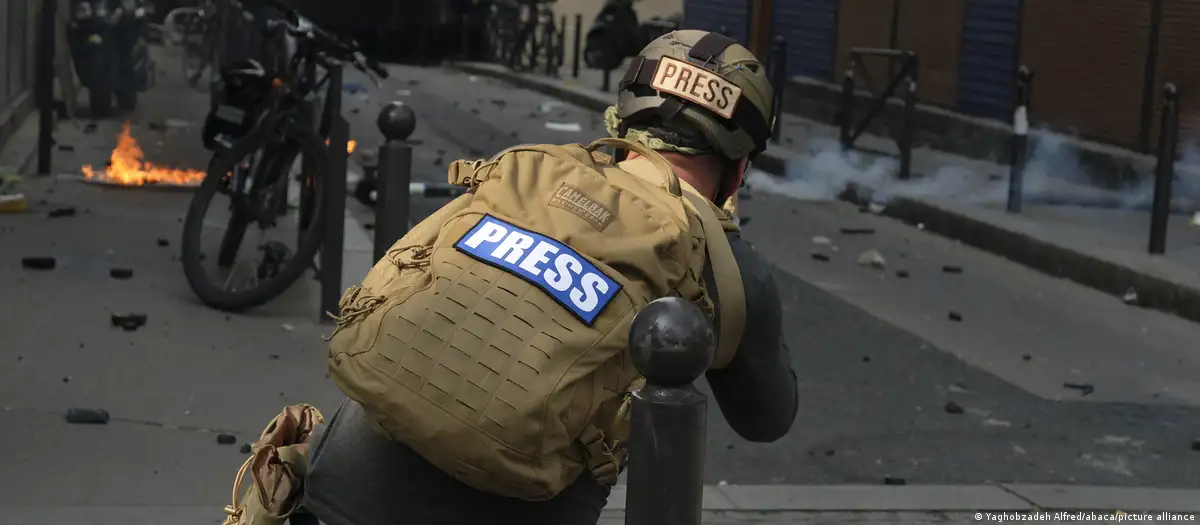
As 2025 shattered all records for journalist killings and imprisonments, the global information ecosystem faces a structural crisis that threatens democracy, accountability, and the public's fundamental right to know.
GPN International·March 31, 2026·Human Rights Desk
Illustration: GPN International / Press Freedom Desk. Data: CPJ, RSF, UNESCO, IFJ, 2025 to 2026.
129
Journalists killed in 2025, the deadliest year on record
CPJ, Feb 2026
360+
Journalists imprisoned globally as of Dec 2025
CPJ / RSF
63%
Rise in self-censorship among journalists since 2012
UNESCO, 2025
10%
Global decline in freedom of expression since 2012
UNESCO World Trends Report
85%
Journalist killings where perpetrators go unpunished
UNESCO, 2024
75%
Women journalists experiencing online violence in 2025
ICFJ / UN Women
A crisis decades in the making
Press freedom, enshrined in Article 19 of the Universal Declaration of Human Rights and foundational to every functioning democracy, is experiencing its most severe global contraction since the Cold War. The data is unambiguous: 2025 was the deadliest year for journalism in recorded history, the second consecutive year-on-year record for press deaths, and part of a sustained, multi-front assault on the independence of information.
According to UNESCO's World Trends in Freedom of Expression and Media Development Report 2022 to 2025, freedom of expression worldwide has fallen by 10% since 2012, a decline comparable to that seen during the most unstable periods of the 20th century. The implications extend well beyond newsrooms. Where journalists cannot report freely, corruption flourishes, public health suffers, and democratic accountability collapses.
"Journalists are being killed in record numbers at a time when access to information is more important than ever. Attacks on the media are a leading indicator of attacks on other freedoms."
CEO, Committee to Protect Journalists, February 2026
The deadliest year: 2025 by the numbers
The Committee to Protect Journalists confirmed 129 journalists and media workers killed in 2025, surpassing every previous year since tracking began more than three decades ago. The International Federation of Journalists corroborated the figure at 128. Israel was responsible for two-thirds of all press killings in both 2024 and 2025. In Ukraine, four journalists were killed by military drones. In Mexico, the deadliest country outside active war zones, nine journalists were murdered by organised crime.
During the broader 2022 to 2025 period, 186 journalists were killed while covering wars and conflict zones, a 67% increase compared to the previous reporting period of 2018 to 2021. Impunity remains the defining institutional failure: while accountability rates have modestly improved from 95% impunity in 2012 to 85% in 2024, the overwhelming majority of those who kill journalists still face no legal consequences.
Top jailers of journalists (as of Dec 1, 2025)
China (incl. HK)
143
Russia
48
Israel
42
Azerbaijan
25
Egypt
15
Sources: RSF, IFJ, CPJ, December 2025 snapshot
Regional picture: no region untouched
Americas
The region recorded its lowest press freedom ranking since 2020. The US saw its sharpest single-year decline. Mexico recorded nine journalist murders by organised crime. Venezuela shut over 400 radio stations and detained 25 journalists.
Middle East and Gaza
43% of all journalist killings in 2025 occurred in Gaza. Israel also imprisons the second-largest number of foreign journalists. Iran maintains a revolving door of imprisonment and judicial abuse.
Asia-Pacific
The region holds the world's highest concentration of imprisoned journalists at 277. China alone jails 143. The Taliban has systematically erased female journalists from public life in Afghanistan.
Europe
Imprisoned journalists rose nearly 40% year on year, the highest in Europe since 2018, driven by intensified repression in Russia and Azerbaijan. 26 of Russia's 48 jailed journalists are Ukrainian nationals.
Africa
Sudan was the deadliest country in the region; six of ten African journalist deaths occurred there. Warring factions have specifically targeted reporters since April 2023.
United States
Freedom of expression placed at its lowest since World War II according to independent research. The Pentagon introduced pre-approved coverage rules prompting major outlets to surrender credentials. 170 attacks on journalists recorded in 2025.
Structural threats: beyond physical danger
Physical violence is only one vector of suppression. Governments have increasingly weaponised legal systems, filing terrorism, espionage, and subversion charges against journalists, to criminalise the act of reporting. Sixty percent of currently imprisoned journalists face such anti-state charges. Digital surveillance, spyware, and online harassment, particularly gender-based, compound the risk. Research found that 75% of women journalists experienced online violence in 2025, up from 73% in 2020.
Economic fragility further compounds these pressures. Advertising revenue continues migrating to technology platforms, weakening editorial independence and leaving newsrooms susceptible to political or corporate capture. The 2025 Reporters Without Borders World Press Freedom Index was the first in history to classify the global journalism environment as "difficult," with a global average score falling to 55 out of 100.
"128 journalists killed in a single year is not just a statistic. It is a global crisis. Governments must act now to protect media workers, bring killers to justice, and uphold press freedom."
Secretary General, International Federation of Journalists, December 2025
The path forward
World Press Freedom Day 2026, themed "Shaping a Future at Peace," will convene in Lusaka, Zambia on May 4 and 5, bringing together press freedom advocates, technologists, civil society, and policymakers to move from diagnosis to coordinated action. UNESCO's agenda specifically addresses the intersection of artificial intelligence, misinformation, and journalist safety.
The International Federation of Journalists has called for a binding United Nations convention guaranteeing the safety and independence of journalists. Scholars and advocates argue that without structural legal protections, an independent funding ecosystem for journalism, and genuine prosecutorial accountability for attacks on media workers, the democratic information infrastructure that underpins all other rights will continue its documented collapse.
Press freedom is not a professional concern for journalists alone. It is the precondition for an informed citizenry, governmental accountability, and the peaceful resolution of social conflict. When journalists are silenced, through bullets, prison cells, or financial ruin, it is the public record that falls silent with them.
Sources and references
Committee to Protect Journalists (CPJ), 2025 Killed Report, February 2026
Reporters Without Borders (RSF), 2025 Annual Press Freedom Round-Up
International Federation of Journalists (IFJ), Final 2025 Killed List, December 2025
UNESCO, World Trends in Freedom of Expression and Media Development Report 2022 to 2025
V-Dem Institute, Democracy Report 2026
Inter American Press Association (IAPA), Press Freedom Index 2026
ICFJ / UN Women, Online Violence Against Women Journalists, 2025