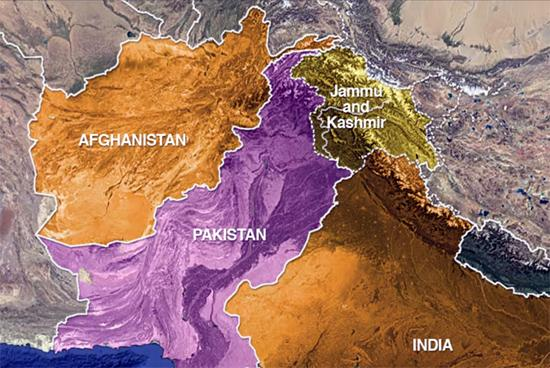
🌏 Security Developments in South Asia: Emerging Threats and Strategic Shifts
South Asia continues to evolve as one of the most sensitive and strategically contested regions in the global security landscape. The interplay of traditional rivalries, internal instability, and emerging non-traditional threats has created a complex and volatile security environment across countries such as Pakistan, India, and Afghanistan.
In recent years, security developments in the region have intensified, reflecting both historical fault lines and new geopolitical realities.
One of the most significant recent developments is the sharp escalation in tensions between Pakistan and Afghanistan. Cross-border military operations, airstrikes, and retaliatory attacks have pushed relations toward open conflict.
-
Pakistan has intensified cross-border counterterrorism operations, targeting militant safe havens
- Civilian casualties and border instability continue to rise
Recent clashes mark a shift from limited skirmishes to more aggressive, pre-emptive military strategies.
👉 This escalation reflects a broader transformation in Pakistan’s security doctrine, moving from defensive to proactive engagement.
⚠️ Rise of Terrorism and Insurgency
Terrorism remains the most persistent and evolving threat in South Asia.
-
Groups like TTP and ISKP continue to operate across borders
-
Insurgencies in regions such as Baluchistan have intensified
-
Use of advanced weapons, drones, and even female suicide bombers signals tactical evolution
Following the U.S. withdrawal from Afghanistan, a security vacuum has contributed to a resurgence of militant activity, particularly in Pakistan’s border provinces.
👉 The region now faces hybrid threats, combining terrorism, insurgency, and asymmetric warfare.
🏠 Internal Security Pressures
Domestic instability continues to undermine national security across South Asia.
In Pakistan:
-
Rising terrorist attacks and insurgent violence
-
Ethnic tensions and governance challenges
-
Increased militarization in border regions
In India:
-
Heightened internal security alerts
-
Expansion of counterterrorism doctrines and surveillance
These internal challenges are increasingly seen as more critical than traditional interstate wars, reshaping national security priorities.
⚔️ India–Pakistan Strategic Competition
The long-standing rivalry between India and Pakistan remains central to regional stability.
-
Continued disputes over Kashmir
-
Nuclear deterrence maintaining a fragile balance
-
Increasing diplomatic and military competition
India’s recent “zero-tolerance” security doctrine reflects a more assertive posture, combining military action, diplomacy, and strategic isolation efforts.
👉 Despite periodic dialogue, the relationship remains characterized by cycles of escalation and limited engagement.
🌐 External Power Influence and Geopolitics
South Asia’s security environment is deeply influenced by global actors:
-
United States focus on counterterrorism
-
China expanding regional influence
-
Ongoing geopolitical competition shaping alliances and policies
The region remains part of a broader strategic arc, where great power rivalry intersects with local conflicts, often intensifying instability rather than resolving it.
🧠 Shift Toward Non-Traditional Security
Security in South Asia is no longer limited to military threats.
Emerging dimensions include:
-
Cyber warfare and digital surveillance
-
Economic insecurity and energy crises
-
Human security issues such as poverty and inequality
👉 However, regional states still allocate more resources to military security than human development, limiting long-term stability.
🔗 Interconnected Security Landscape
Security dynamics in South Asia operate across three interconnected levels:
-
Domestic → internal instability and governance
-
Regional → interstate rivalries and border conflicts
-
Global → influence of major powers
Instability in one dimension often triggers consequences across others, making the region highly sensitive to both internal and external shocks.
🧾 Conclusion
South Asia’s security environment is undergoing a significant transformation. The combination of:
-
Escalating Pakistan–Afghanistan tensions
-
Persistent India–Pakistan rivalry
-
Rising terrorism and insurgency
-
Increasing global geopolitical involvement
has created a multi-layered security crisis.
Sustainable peace in the region will depend on:
-
Effective counterterrorism cooperation
-
Conflict resolution mechanisms
-
Greater emphasis on human security
-
Stronger regional diplomacy
Without these measures, South Asia is likely to remain a high-risk geopolitical zone with global implications.