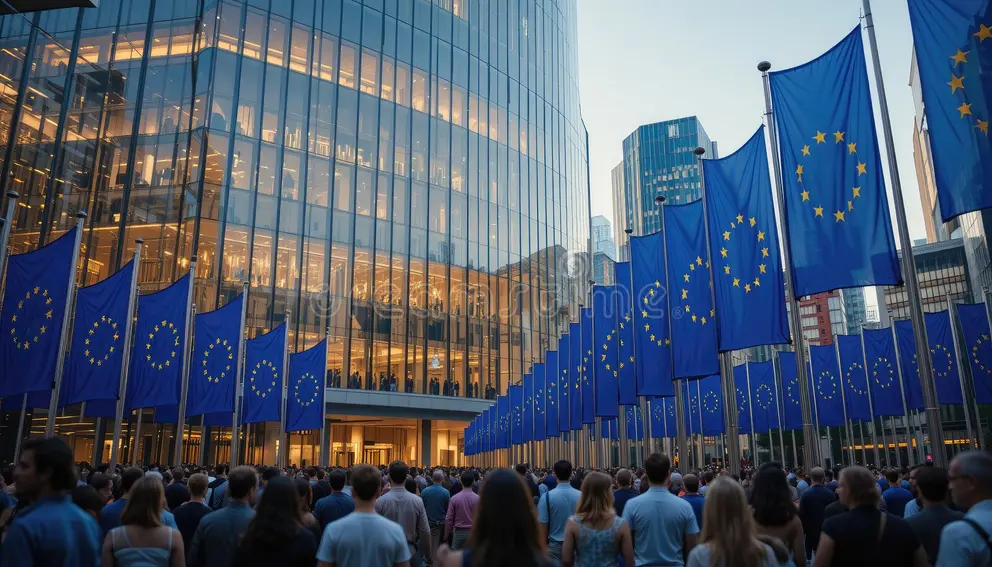
1. Europe pushes for technological sovereignty
The European Union is actively planning a shift away from reliance on foreign technology, especially from the US and China. A proposed initiative would invest roughly €20 billion in local AI, microchip production, and sovereign cloud infrastructure to strengthen digital resilience and data control across the bloc. This marks a clear pivot toward digital autonomy and security.
2. Macron urges deeper geopolitical ambition
French President Emmanuel Macron has publicly stated that Europe must become a geopolitical power in its own right, including investing in defense capabilities and deeper strategic planning. This reflects a broader European debate on reducing dependence on traditional allies and strengthening autonomous security frameworks.
3. Energy security concerns intensify
Escalating instability in the Middle East, especially disruptions in the Strait of Hormuz, has raised alarms about energy shortages in Europe. Key energy infrastructure disruptions have the potential to impact fuel and energy supplies, prompting warnings from industry leaders about shortages and driving strategic discussions about energy diversification.
4. Banking under geopolitical stress
The European banking sector is entering a period of heightened geopolitical uncertainty, though regulators report that financial institutions remain broadly resilient for now. This uncertainty stems from global tensions, energy price volatility, and shifting geopolitical risk factors.
5. Russia-Ukraine tensions and internal EU energy politics
Ongoing disputes over pipeline flows between Slovakia, Hungary, and Ukraine have escalated diplomatic and energy friction within the region. These disputes reflect how the broader Russia‑Ukraine war continues to strain European unity on energy policy and geopolitical alignment.
6. Strategic trade and de‑risking efforts
Europe’s trade strategy is adapting to a changing global order. Studies show a shift from globalization toward “securonomics,” where national wealth and security are prioritized. The EU seeks to diversify trade partners and reduce dependencies, though balancing internal political differences remains a challenge.
7. Parliamentary action on energy independence
In late 2025, the European Parliament voted to phase out Russian natural gas imports by 2027, aiming to further reduce dependency on Russian energy sources and enhance long‑term energy security across the bloc.
8. EU diplomacy and regional relations
The EU–Armenia summit in May 2026 highlights continued diplomatic engagement with Eastern partners, strengthening ties with neighboring states and advancing cooperation on political and economic fronts.
9. Wider geopolitical pressures
External forces, including changes in U.S. policy priorities and instability tied to global conflicts, are prompting European leaders to reassess defense cooperation and transatlantic relations. Some analysts argue Europe must develop greater geopolitical leverage rather than relying mainly on traditional alliances.
Summary: In 2026, Europe’s geopolitical landscape is shaped by moves toward technological and energy autonomy, efforts to balance strategic relations with partners like the U.S. and China, ongoing security concerns linked to Middle East tensions, and continued fallout from the Russia‑Ukraine conflict. Internal coordination and trade diversification remain key priorities as the EU seeks to assert itself in a shifting global order.